
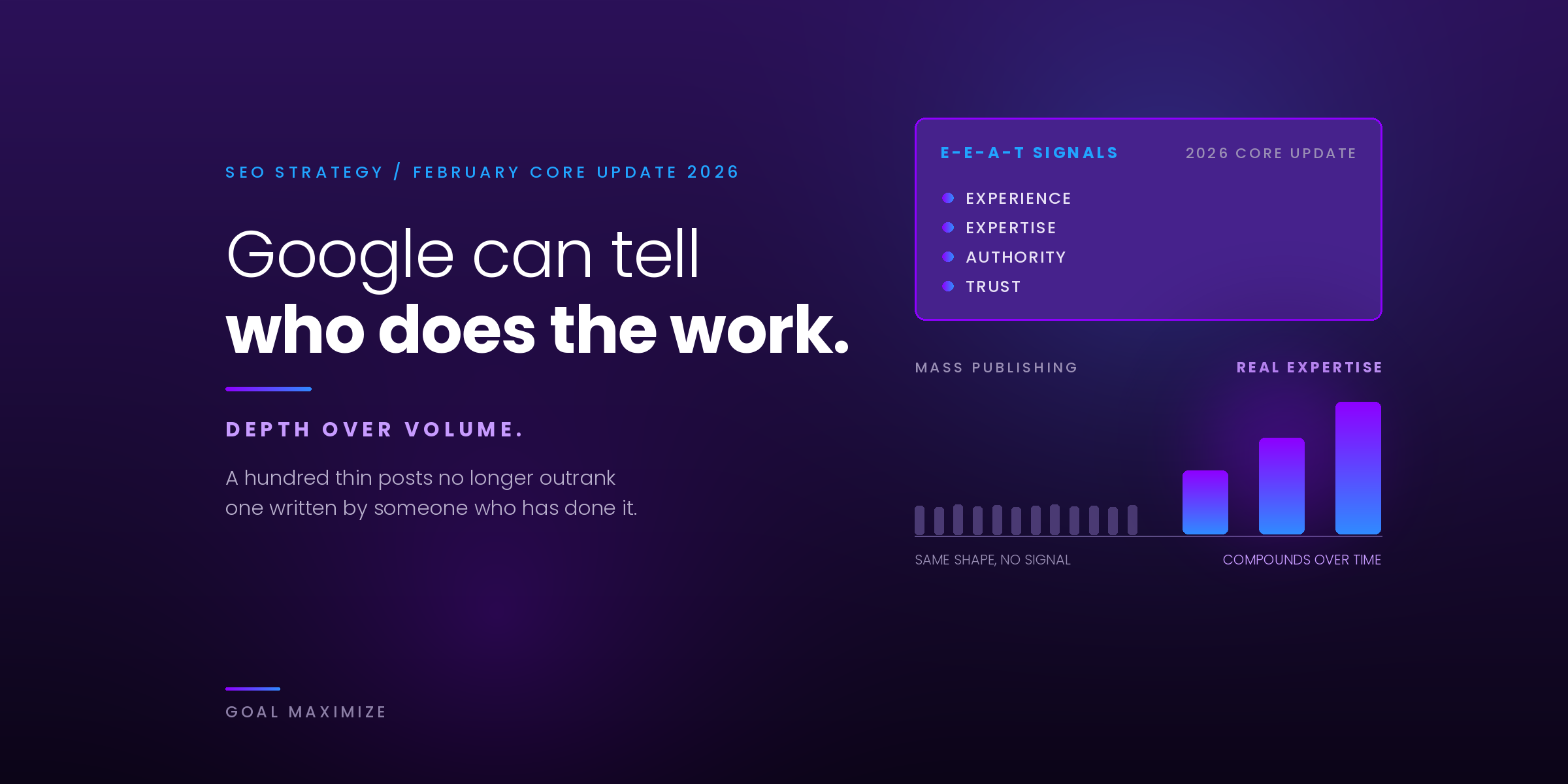
Search results are changing – fast. Over the past year, Google has made it clear that publishing large volumes of generic articles is no longer enough to rank consistently. The February Core Update 2026 reinforces a simple idea: depth, experience, and credibility now matter more than content volume.
Businesses that once relied on publishing dozens of SEO articles each month are seeing unpredictable rankings. Meanwhile, smaller websites led by real experts are gaining visibility. The reason is straightforward – Google is getting better at recognizing who actually understands a topic.
If you look at recent shifts in search behavior and updates explaining how AI search is changing user behaviour, one trend stands out: people want trustworthy answers, not recycled information.
This article breaks down why Google is rewarding real expertise and how brands, founders, and marketers can adapt. how AI search is changing user behaviour how AI search is changing user behaviour
The End of Mass Content Publishing as an SEO Strategy
For years, SEO advice followed a predictable formula:
- Publish more blogs
- Target more keywords
- Scale content production
- Expect rankings to follow
That approach worked when search engines primarily evaluated pages based on keywords and backlinks.
But search has evolved.
Google now evaluates context, authority, and experience signals across an entire website – not just individual posts.
Publishing 100 articles written without real insight often creates the opposite effect:
- Repetitive content
- Thin expertise signals
- Weak topical authority
- Lower user engagement
Instead of rewarding quantity, Google’s systems increasingly prioritize content that demonstrates real understanding.
Why Google Is Prioritizing Expertise in 2026
The February Core Update continues a long-term shift toward EEAT:
- Experience
- Expertise
- Authority
- Trust
Google’s goal hasn’t changed: deliver the most reliable answers.
What has changed is how Google identifies reliability.
Today, rankings depend on signals such as:
- Consistent topical focus across a website
- Real-world experience behind published content
- Recognizable authors or experts connected to topics
- Evidence of original thinking rather than summaries
In simple terms:
Google wants content written by people who do the work, not just write about it.
Search Behavior Has Changed – And Google Followed
Modern search users don’t want ten identical articles explaining the same basics. They want:
- practical insights
- lived experience
- clear explanations
- real examples
AI-generated summaries across the internet forced Google to raise its quality standards. When information becomes easy to produce, an original perspective becomes the differentiator.
This explains why many high-volume content sites lost visibility after recent updates while expert-driven websites gained traction.
Google is now better at identifying patterns like:
- identical structure across articles
- over-optimized keyword usage
- surface-level explanations without depth
The algorithm increasingly favors content that feels written by someone who understands consequences, challenges, and outcomes.
What “Real Expertise” Actually Looks Like
Expertise doesn’t mean academic language or complicated terminology. In fact, the strongest signals often come from clarity and specificity.
Real expertise shows up when content includes:
1. First-Hand Perspective
Writers explain why strategies work, not just what they are.
2. Decision-Making Context
Experts discuss trade-offs, risks, and lessons learned.
3. Consistent Topic Authority
A website repeatedly demonstrates knowledge within a focused area.
4. Human Insight
Readers sense that a real person is behind the advice.
These elements create trust – and trust is becoming a measurable ranking factor.
Why Personal Authority Matters More Than Ever
Another major shift in modern SEO is the growing importance of individual expertise.
Google increasingly connects content to people, not just domains.
When readers trust a voice, they stay longer, return more often, and engage deeper. Those behaviors reinforce authority signals.
This is why many successful brands invest in thought leadership rather than anonymous content publishing.
Many business leaders, including James Assali, emphasize that long-term credibility comes from demonstrated experience rather than short-term marketing tactics. A strong example of this philosophy appears in discussions around why Personal values matter more than tactics, highlighting how long-term credibility often outweighs short-term marketing tricks. When expertise aligns with an authentic perspective, both readers and search engines recognize the difference.
The Hidden Problem With Scaled Content
Mass publishing creates a silent risk most businesses don’t notice immediately.
At first, traffic may grow. But over time:
- articles compete against each other
- The topical focus weakens
- Audience trust declines
- rankings become unstable
Google’s newer systems evaluate entire sites holistically.
If a website publishes content across too many unrelated areas or produces articles without depth, it becomes harder for search engines to understand what the site truly specializes in.
Topical clarity now matters more than content volume.
How Businesses Should Adapt Their Content Strategy
Instead of asking “How many blogs should we publish?” the better question is:
What expertise are we known for?
Here’s how modern SEO teams are adapting.
Focus on Fewer, Stronger Topics
Choose core areas where your business has real experience.
Publish Insight, Not Definitions
Avoid writing articles that simply explain basics already covered everywhere else.
Build Topic Clusters
Create multiple articles exploring different angles of the same subject instead of chasing unrelated keywords.
Show Real Experience
Include lessons learned, observations, and outcomes.
Prioritize Reader Value Over Algorithms
Ironically, content written for people tends to perform better in search.
Signals Google Uses to Recognize Expert Content
While Google never reveals exact ranking formulas, observable patterns suggest several signals matter today:
- Author consistency across related topics
- Meaningful internal linking between expertise areas
- Brand mentions beyond a single website
- Content depth compared to competing pages
- Engagement metrics like time on page
These signals help Google understand whether a site contributes original value to the web.
The Future of SEO Belongs to Experts, Not Publishers
The biggest misconception in SEO is believing success comes from publishing more content than competitors.
In reality, modern search rewards clarity of expertise.
Businesses that succeed moving forward typically:
- teach rather than promote
- Share experience instead of repeating trends
- develop recognizable voices
- build trust over time
This shift benefits smaller brands and knowledgeable founders because expertise cannot be mass-produced.
People Also Ask
Does publishing more content still help SEO?
Only when each article adds new insight. Large amounts of similar content can weaken authority rather than improve rankings.
What is considered expert content?
Content demonstrating experience, clear reasoning, and practical understanding rather than general explanations.
Can small websites compete with big brands?
Yes. Google increasingly rewards focused expertise over domain size.
How long does it take to build topical authority?
Usually, several months of consistent, high-quality publishing within a specific niche.
Final Thoughts
Google’s February Core Update 2026 didn’t introduce a completely new philosophy – it simply strengthened an existing one.
Search engines are learning to recognize expertise the same way people do.
Readers trust content created by individuals and businesses that understand their subject deeply. Google’s systems now reflect that human instinct.
The path forward is not producing more content but producing better-informed content – articles grounded in experience, guided by real insight, and built around genuine expertise.
In the long run, authority isn’t manufactured through volume. It’s earned through consistency, clarity, and trust.
About James Assali
James Assali is a business leader and entrepreneur focused on marketing strategy, brand development, and digital transformation. He shares practical insights drawn from real-world business experience, helping companies build sustainable growth through smarter marketing and leadership decisions.

**Shalini Thakur** is an SEO Specialist at Goal Maximize with 9+ years of experience in technical SEO, content strategy, and AI-powered search optimization. Specializes in data-driven SEO strategies, website optimization, content development, and adapting websites to the evolving AI-powered search landscape.